Bidet Seats for Toilets: What Fits What
Most standard toilets take a bidet seat without trouble, but the toilet’s type decides how easy it is. A two-piece or one-piece bowl is straightforward; skirted, wall-hung, and some European toilets are where fit gets complicated and needs checking before you buy, not after.
The toilets that fit easily
Standard two-piece and one-piece toilets — the overwhelming majority in US homes — take a bidet seat with no special steps, provided the bowl shape matches the seat.
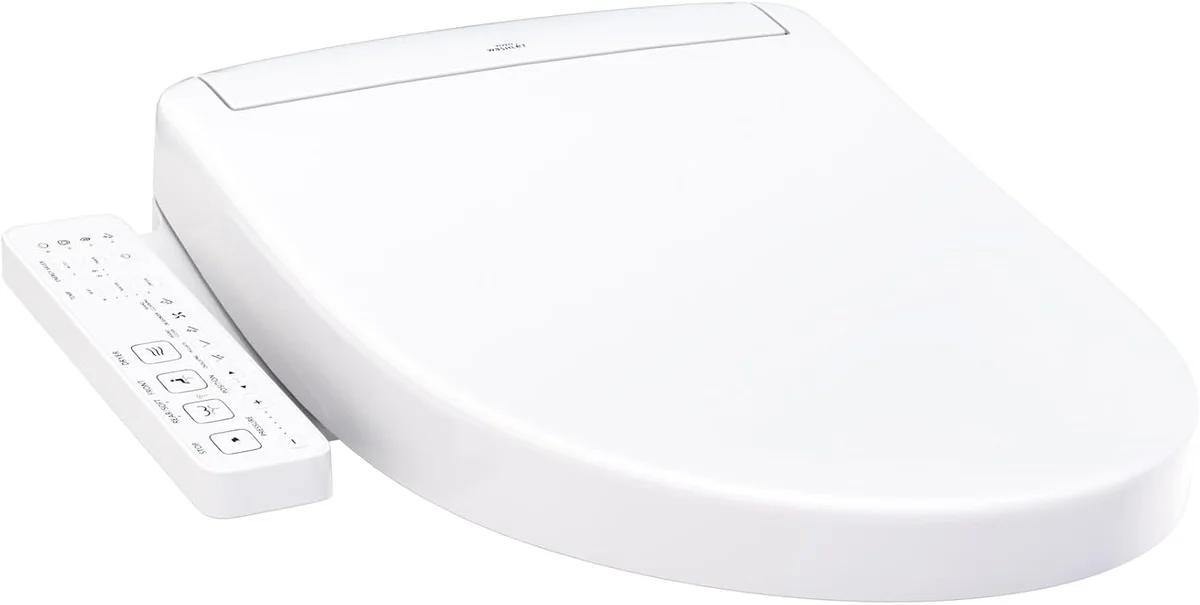
If you have an ordinary toilet, this is a short story. A standard two-piece toilet, with its separate tank and an exposed pair of seat bolts at the back of the bowl, is exactly what bidet seats are designed for — the seat’s bracket clamps onto the 5.5-inch bolt spread every US toilet shares, and you are done in under an hour. A one-piece toilet, where the tank and bowl are fused, fits just as easily as long as the bowl shape is right. For both, the only real gate is the one every buyer faces: most seats are elongated-only, so confirm a round bowl is compatible before buying, the same way our size and fit guide walks the three measurements. Brands from TOTO bidet seats to Kohler bidet seats all target this standard toilet, which is why the catalog is so deep for it.
- Bowl shape Elongated only Measure your bowl — elongated-only seats overhang the other shape.
- Mounting clearance 50 mm behind seat Tank-to-seat gap must clear the control housing.
- Power None — non-electric No outlet needed.
- Water-line access T-valve included; standard 7/8-inch toilet supply; bolt spread 5.5 in Shut-off valve and supply line must accept the tee.
Check every axis against your toilet before buying
The toilets that get tricky
Three toilet styles complicate a bidet seat: skirted toilets that hide the bolts, wall-hung toilets with a carrier frame, and European toilets with a different bolt layout. Each is often solvable, but only with the right seat.
The harder cases share a theme: the mounting point is not where a standard seat expects it. A skirted toilet hides its bolts behind a smooth panel, so the seat must list skirted compatibility or ship a special bracket — many do, but a few cannot anchor at all. A wall-hung toilet bolts to a concealed carrier frame, and the frame or bolt spacing can interfere with the seat’s bracket, so the specific pairing has to be verified. European and some designer toilets use a different bolt layout than the US-standard 5.5-inch spread, which can leave a US-market seat’s hardware misaligned. None of these is an automatic no — skirted and wall-hung owners often find a compatible seat — but each turns "will a bidet seat fit?" into "will this seat fit this toilet?", a question answered on the product page, not by assumption.
The recurring r/bidets thread from skirted- and wall-hung-toilet owners is the same: the bowl shape was fine, but the hidden bolts or the carrier frame turned a ten-minute job into a hunt for the one seat that fits.
| Toilet type | Bidet-seat fit | What to check |
|---|---|---|
| Standard two-piece | Easy | Bowl shape only |
| One-piece | Easy | Bowl shape only |
| Skirted / concealed-trap | Tricky | Skirted compatibility or bracket |
| Wall-hung | Tricky | Carrier frame + bolt spacing |
| European / designer | Tricky | Non-standard bolt layout |
| Smart / integrated | N/A | Already has a bidet |
The toilet that needs no seat
A smart or integrated toilet already has the wash and heated seat built in, so a bidet seat would be redundant. If your toilet already washes, you own the integrated version of what a seat adds.
One toilet type takes a bidet seat off the table entirely, in a good way: the smart or integrated toilet that already includes a bidet. These units build the nozzle, the warm water, and the heated seat into the bowl, so there is nothing for a seat to add — we cover that whole category in toilets with heated seats and a bidet. The point worth making is that a bidet seat and an integrated toilet are two routes to the same daily experience, and you only need one. If you have an ordinary toilet, the seat is almost always the cheaper, easier route; if you happen to already own an integrated unit, you are done. The confusion to avoid is buying a seat for a toilet that already washes, or assuming you need a whole new toilet when a seat would do.
The outlet beside the toilet
One more thing decides which seat your toilet can take: whether there is a grounded GFCI outlet within about three feet. No nearby outlet means a non-electric seat, whatever the toilet style.
Toilet type settles whether a seat can mount; the outlet settles which kind of seat it can be. An electric seat — the kind with warm water, a heated seat, and a dryer — needs a grounded GFCI outlet within about three feet, so a bathroom whose toilet sits far from any socket points to a non-electric bidet seat until an electrician adds power. This is independent of the toilet’s style: a perfectly bidet-ready standard toilet with no nearby outlet still rules out an electric seat, while a tricky skirted toilet next to an outlet can still take a warm-water seat if a compatible model exists. Confirm both — the toilet type and the outlet — and you know not just whether a seat fits, but exactly which seats are on your list. Pairing a Brondell bidet seat or similar to the toilet you have is then a matter of matching specs, not guesswork.
Fixes for a tricky toilet
A toilet that does not fit a standard seat is rarely a dead end. Universal brackets, top-mount hardware, and adapter plates solve most skirted and odd-bolt toilets — the trick is matching the fix to the obstacle.
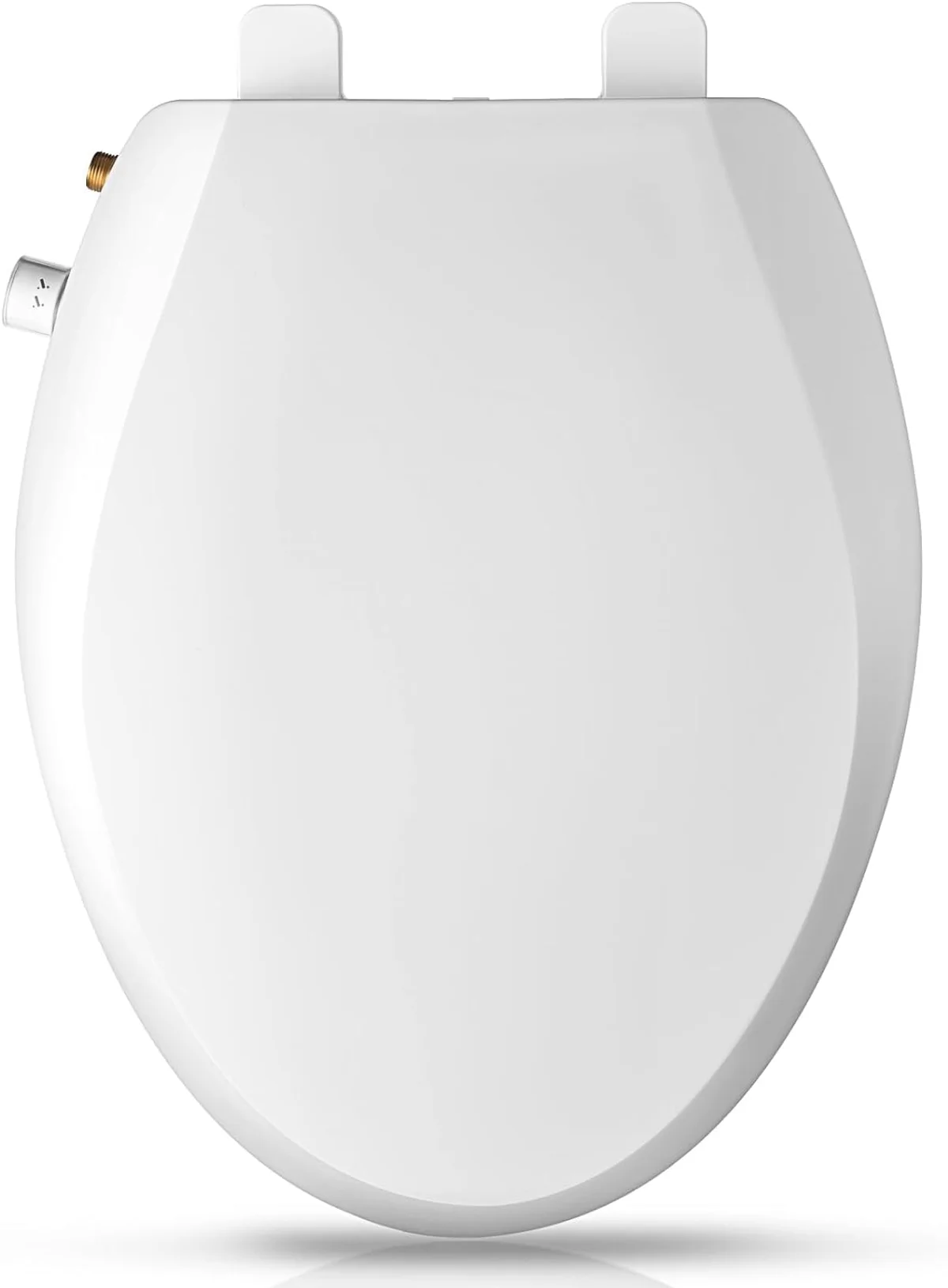
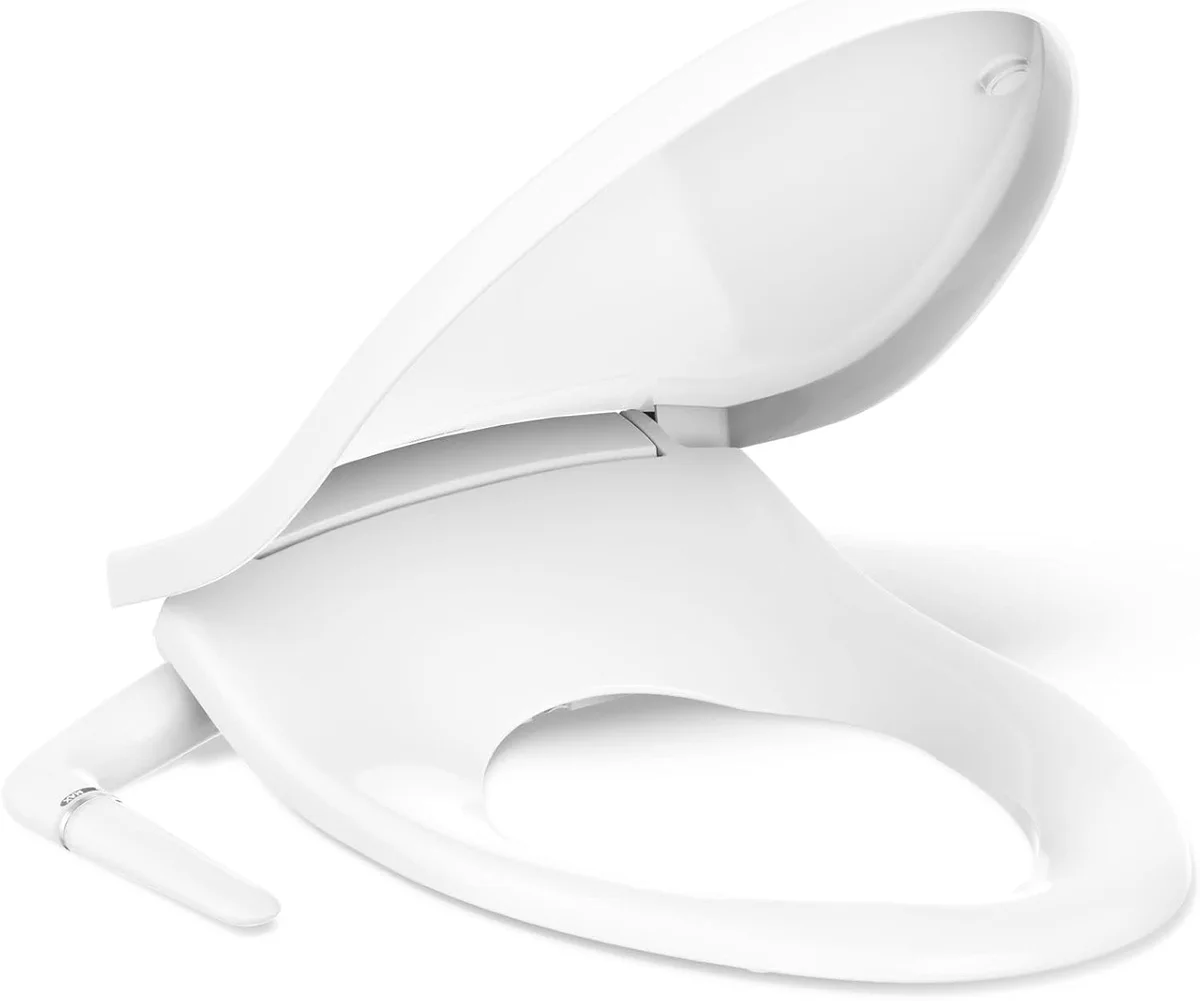
Before giving up on a tricky toilet, run through the three common fixes. Many seats ship with a universal mounting bracket that adjusts to bolt spreads off the 5.5-inch standard, which handles a surprising share of European and designer toilets. For skirted toilets, the answer is usually a seat that includes top-mount hardware you tighten from above rather than reaching underneath the hidden trapway — manufacturers like TOTO bidet seats publish which models carry it. And for the small number of toilets where neither works, an aftermarket adapter plate can re-create a standard mounting surface, at the cost of raising the seat a few millimetres. The honest rule is to identify the exact obstacle first — hidden bolts, wrong spacing, or no flat mounting surface — then buy the seat or part that addresses that specific problem, rather than hoping a standard seat fits.
When even the fixes look uncertain, the lowest-risk move is to buy from a seller with an easy return window so a seat that will not anchor can go back. A Kohler bidet seats listing or a major retailer will state skirted and wall-hung compatibility on the product page, and pairing that with a generous return policy turns an uncertain fit into a no-risk trial. For the underlying measurements that decide all of this, our size and fit guide is the companion to this type-by-type view.
Confirm the fit, then pick
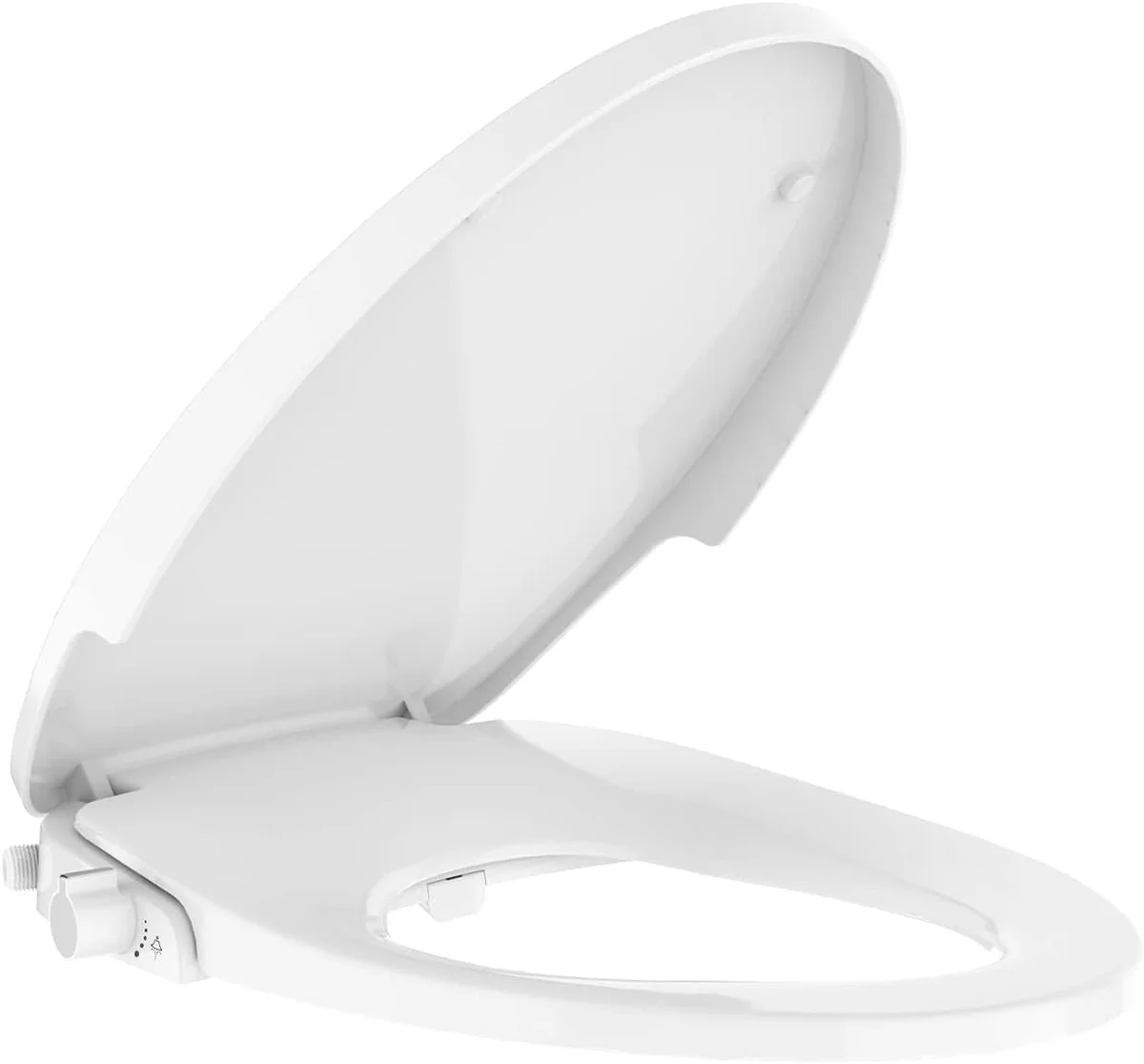
Once you know your toilet takes a seat, choose one: browse our best bidet toilet seats roundup, run the exact numbers with our size and fit guide, or read the Kohler PureWash E590 review for a long-term read on a major-brand option.
Toilet compatibility questions
Will a bidet seat fit any toilet?
Most standard toilets, yes, but not all. A standard two-piece or one-piece toilet with an exposed bolt area and an elongated bowl takes a bidet seat easily; skirted, wall-hung, and some European toilets are where compatibility gets complicated and needs checking before you buy.
Can you put a bidet seat on a one-piece toilet?
Usually yes, as long as the bowl shape matches the seat.
Do bidet seats fit skirted toilets?
Sometimes, but check first. A skirted toilet hides its mounting bolts behind a smooth panel, so a bidet seat needs to list skirted-toilet compatibility or include the right bracket; many do, but a few cannot anchor at all, which is why the toilet style matters as much as the bowl measurement.
Can a wall-hung toilet take a bidet seat?
Often, but the bolt layout and the carrier frame can interfere, so verify the specific model.
Does my smart toilet need a bidet seat?
No — a smart or integrated toilet already has the wash and heated seat built in, so adding a bidet seat would be redundant. The seat is for ordinary toilets that lack those functions; if your toilet already washes, you have the integrated version of what a seat provides.
Sources
- TOTO USA — WASHLET fit and compatibility. Accessed 2026-05-27.
- Kohler — seat compatibility by toilet type. Accessed 2026-05-27.
- r/bidets community owner reports. Accessed 2026-05-27.